






Joe Wright stands as one of contemporary cinema’s most visually distinctive directors, a filmmaker whose ability to traverse genres while maintaining his signature aesthetic sensibility has established him as a unique voice in modern filmmaking. Through his diverse body of work, Wright demonstrates an exceptional capacity to blend literary adaptation with kinetic action, intimate character study with sweeping visual poetry. His directorial approach consistently elevates genre material through sophisticated cinematography, nuanced performances, and an almost painterly attention to visual composition. Three films in particular – Atonement, The Soloist, and Hanna – showcase the remarkable range and artistic maturity that define Joe Wright’s directorial vision, each representing a masterclass in how thoughtful direction can transform familiar narratives into profound cinematic experiences.
- The Literary Precision of Wright's Dramatic Vision
- Joe Wright's Genre-Defying Action Choreography in Hanna
- How Wright Transforms Social Drama in The Soloist
- What Makes Joe Wright's Visual Style So Distinctive?
- The Evolution of Wright's Directorial Approach
- Joe Wright Movies: A Study in Thematic Consistency
- Where to Watch
- FAQ: Joe Wright Director and Filmmaking
The Literary Precision of Wright’s Dramatic Vision
Wright’s approach to Atonement established him as a director capable of translating complex literary narratives into visually compelling cinema. The film’s exploration of guilt, love, and the destructive power of imagination showcases Wright’s ability to handle delicate emotional material without sacrificing visual grandeur. His direction transforms Ian McEwan’s intricate novel into a cinematic meditation on storytelling itself, where the act of narration becomes both salvation and damnation.
The director’s handling of time and memory in Atonement reveals his sophisticated understanding of cinema’s unique storytelling capabilities. Wright employs visual techniques that mirror the novel’s complex temporal structure, using color palettes and lighting to distinguish between different time periods and emotional states. The famous Dunkirk sequence, filmed in a single sweeping take, demonstrates Wright’s technical mastery while serving the story’s themes of chaos and loss.
Character Development Through Visual Language
Wright’s directorial strength lies in his ability to develop character through purely visual means. In Atonement, Briony’s journey from naive child to guilt-ridden adult is tracked through subtle changes in composition and framing. Wright uses the physical spaces of the Tallis estate to reflect the characters’ emotional landscapes, with the library serving as a cathedral of literature where truth and fiction collide with devastating consequences.
Joe Wright’s Genre-Defying Action Choreography in Hanna
The transition from period drama to action thriller in Hanna reveals Wright’s versatility as a filmmaker and his refusal to be confined by genre conventions. Wright approaches the action genre with the same visual sophistication he brings to literary adaptations, creating sequences that function as both thrilling set pieces and character development opportunities. His direction transforms what could have been a straightforward chase film into a dark fairy tale exploration of identity and belonging.
Wright’s collaboration with cinematographer Alwin Küchler in Hanna produces some of the most distinctive action sequences in contemporary cinema. The director’s use of continuous takes and fluid camera movement creates an immersive experience that places viewers directly within Hanna’s disorienting journey. The famous subway station fight scene, choreographed as a single unbroken sequence, demonstrates Wright’s commitment to practical filmmaking techniques that serve story and character.
The Fairy Tale Architecture of Violence
Wright’s direction in Hanna reveals his ability to find poetry within violence, structuring action sequences according to fairy tale logic rather than conventional thriller mechanics. The film’s various European locations become stages in Hanna’s journey of self-discovery, with Wright using each environment to reflect different aspects of his protagonist’s psychological state. His direction consistently emphasizes the cost of violence, never allowing action to exist purely for spectacle.
How Wright Transforms Social Drama in The Soloist
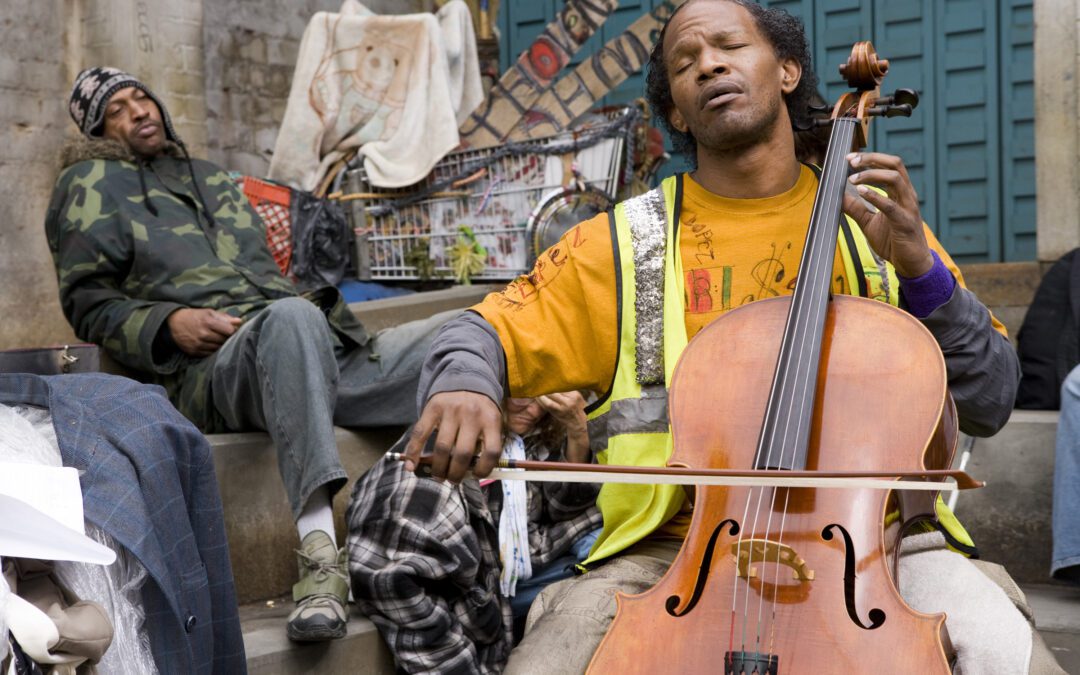
The Soloist represents Wright’s most grounded work, yet his directorial approach elevates this social drama through the same visual sophistication that characterizes his other films. Wright’s handling of the relationship between journalist Steve Lopez and homeless musician Nathaniel Ayers demonstrates his ability to find cinematic beauty in urban environments typically overlooked by mainstream filmmaking. His direction transforms the streets of Los Angeles into a complex social landscape where music becomes a bridge between disparate worlds.
Wright’s approach to mental illness in The Soloist shows remarkable sensitivity and visual creativity. Rather than relying on conventional dramatic techniques, Wright uses color, sound, and movement to externalize Nathaniel’s internal experience. The director’s collaboration with composer Dario Marianelli creates sequences where classical music becomes a visual element, with Wright’s camera moving in harmony with Beethoven’s compositions.
Urban Poetry and Social Consciousness
The director’s treatment of homelessness in The Soloist avoids both sentimentality and exploitation through careful attention to visual detail and authentic performance. Wright’s camera finds dignity in environments others might dismiss, using his signature long takes to allow viewers to fully absorb the complex social dynamics at play. His direction consistently emphasizes the humanity of characters who might otherwise be reduced to social problems.
What Makes Joe Wright’s Visual Style So Distinctive?
Wright’s directorial signature emerges through his consistent use of specific visual techniques across all three films. His preference for long, unbroken takes creates an immersive quality that draws viewers into his characters’ experiences. Whether capturing the chaos of war in Atonement, the precision of violence in Hanna, or the cacophony of urban life in The Soloist, Wright’s camera movements feel choreographed yet organic.
The director’s collaboration with his cinematographers results in films that function as moving paintings, each frame carefully composed to serve both aesthetic and narrative purposes. Wright’s use of color as an emotional language reaches its peak in these three films, with each employing distinct palettes that reflect their respective themes and moods.
Technical Innovation in Service of Story
Wright’s technical approach never exists for its own sake but consistently serves character and narrative development. His famous tracking shots in all three films create emotional rhythms that mirror his protagonists’ internal journeys. The director’s willingness to experiment with unconventional techniques, from the typewriter sequence in Atonement to the pulsing electronic score integration in Hanna, demonstrates his commitment to finding fresh cinematic language for each project.
The Evolution of Wright’s Directorial Approach
Examining these three films chronologically reveals Wright’s growth as a filmmaker and his increasing confidence in genre experimentation. From the literary sophistication of Atonement through the kinetic energy of Hanna to the social realism of The Soloist, Wright demonstrates an ability to adapt his directorial approach while maintaining his distinctive visual voice.
Each film represents a different challenge successfully met: translating beloved literature, reimagining action cinema, and finding poetry in social issues. Wright’s solutions to these challenges reveal a director unafraid to take creative risks while remaining committed to emotional authenticity and visual excellence.
Joe Wright Movies: A Study in Thematic Consistency
Despite their different genres and settings, these three Wright films share common thematic preoccupations that reveal the director’s consistent artistic concerns. Questions of identity, the power of art, and the complexity of human connection run through all three works, suggesting a filmmaker with a unified artistic vision capable of expression across multiple genres.
Wright’s treatment of father-daughter relationships in both Atonement and Hanna, his exploration of creativity’s redemptive power in The Soloist, and his consistent interest in characters struggling with isolation demonstrate thematic depth that elevates his work above mere genre exercise.
Where to Watch
Slovenian:
– Solist – Friday, April 3 at 13:50 EET
– Solist – Tuesday, April 7 at 09:50 EET
– Solist – Wednesday, April 8 at 05:30 EET
Bulgarian:
– Солистът – Friday, April 3 at 14:50 EET
– Солистът – Tuesday, April 7 at 10:50 EET
– Солистът – Thursday, April 9 at 06:30 EET
Romanian:
– Solistul – Friday, April 3 at 14:50 EET
– Solistul – Tuesday, April 7 at 10:50 EET
– Solistul – Thursday, April 9 at 06:30 EET
Serbian:
– Солиста – Friday, April 3 at 13:50 EET
– Солиста – Tuesday, April 7 at 09:50 EET
– Солиста – Wednesday, April 8 at 05:30 EET
Croatian:
– Solist – Friday, April 3 at 13:50 EET
– Solist – Tuesday, April 7 at 09:50 EET
– Solist – Wednesday, April 8 at 05:30 EET
FAQ: Joe Wright Director and Filmmaking
Q: What defines Joe Wright’s directorial style across different genres? A: Wright’s style combines long tracking shots, sophisticated color palettes, and immersive cinematography that serves character development. His visual approach adapts to each genre while maintaining distinctive aesthetic sensibilities.
Q: How does Wright approach literary adaptation differently from other directors? A: Wright translates literary complexity into visual language, using cinematic techniques like extended takes and symbolic color schemes to capture the internal life of written characters without relying heavily on exposition.
Q: What makes Hanna unique among Joe Wright films? A: Hanna represents Wright’s bold genre experimentation, applying his signature visual sophistication to action cinema while maintaining the fairy tale elements and character depth that define his work.
Q: How do these three films demonstrate Wright’s range as a filmmaker? A: The progression from period drama through action thriller to social drama showcases Wright’s ability to master different genres while maintaining thematic consistency and visual excellence across diverse material.
Q: What role does music play in Joe Wright’s directorial approach? A: Music functions as both emotional language and visual element in Wright’s films. His collaborations with composers create sequences where sound and image merge, particularly evident in The Soloist’s classical music integration.
Q: Why is the Dunkirk sequence in Atonement considered a masterpiece of direction? A: The five-and-a-half-minute unbroken take captures the chaos and scale of war while serving the story’s themes of loss and redemption, demonstrating Wright’s ability to merge technical achievement with narrative purpose.