






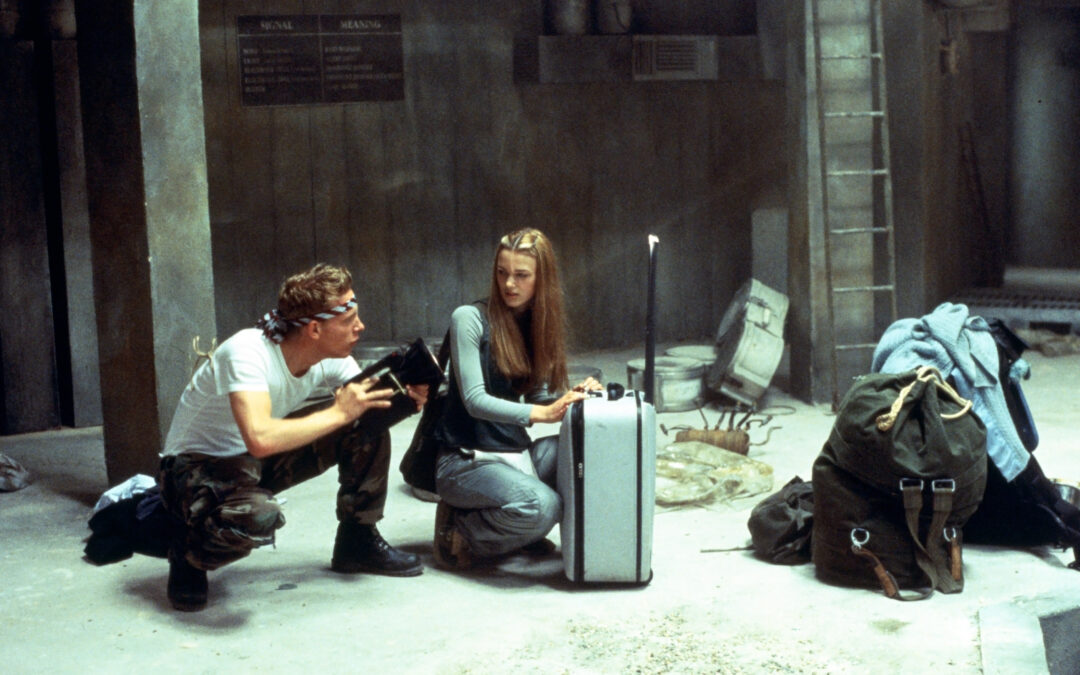
From her breakthrough role as a teenage football enthusiast in “Bend It Like Beckham” to her commanding presence in period dramas and contemporary thrillers, Keira Knightley has established herself as one of Britain’s most versatile and compelling actresses. With her distinctive blend of vulnerability and steel, classical beauty and modern sensibility, Knightley has navigated the treacherous waters of Hollywood while maintaining her artistic integrity. Her filmography reads like a masterclass in range – from psychological thrillers like “The Hole” to lavish historical epics such as “The Duchess,” and from intimate character studies to large-scale adventures like “Everest.” What sets Knightley apart is not merely her ability to inhabit different genres, but her skill in finding the human truth within each character, whether she’s playing an 18th-century aristocrat or a concerned wife watching her husband attempt the world’s most dangerous climb.
- The Early Years: Keira Knightley's Formative Performances
- The Art of Historical Drama: Keira Knightley Films That Define an Era
- Contemporary Challenges: Keira Knightley Acting in Modern Contexts
- The Mastery of Literary Adaptation: Atonement and Beyond
- What Makes Keira Knightley Performances So Compelling?
- The Physical and Emotional Demands of Diverse Roles
- How Keira Knightley Chooses Her Projects
- Where to Watch
- FAQ: Keira Knightley
The Early Years: Keira Knightley’s Formative Performances
Keira Knightley’s journey into serious dramatic territory began with roles that showcased her ability to convey complex emotions beneath a composed exterior. In Nick Hamm’s psychological thriller “The Hole,” Knightley demonstrated her capacity for darker material, playing one of four teenagers who become trapped in an underground bunker. This early performance revealed her talent for suggesting hidden depths and psychological complexity, traits that would become hallmarks of her later work.
The film served as a crucial stepping stone in keira-knightley career development, allowing her to work alongside established actors while exploring the psychological thriller genre. Her portrayal in “The Hole” showed audiences that beneath her period drama persona lay an actress capable of navigating contemporary psychological landscapes with equal skill.
Building Dramatic Credibility
What makes Knightley’s early work particularly impressive is her instinctive understanding of subtext. Even in her younger performances, she possessed an ability to communicate what her characters were thinking and feeling without explicitly stating it – a skill that would prove invaluable in her later, more nuanced roles.
The Art of Historical Drama: Keira Knightley Films That Define an Era
No discussion of keira-knightley performances would be complete without examining her mastery of period drama. In “The Duchess,” directed by Saul Dibb, Knightley embodied Georgiana Cavendish, the 18th-century Duchess of Devonshire, with remarkable authenticity and emotional depth. The role required her to navigate the complex political and personal landscape of Georgian England while portraying a woman ahead of her time.
Knightley’s performance in “The Duchess” showcases her ability to make historical figures feel immediate and relevant to modern audiences. She doesn’t simply wear the costumes and speak the dialogue; she inhabits the role completely, making Georgiana’s struggles with marriage, politics, and personal freedom resonate across centuries. Her chemistry with Ralph Fiennes creates a palpable tension that drives the narrative forward.
The Power of Restraint in Period Performance
What distinguishes Keira Knightley’s approach to historical drama is her understanding that period authenticity doesn’t require emotional distance. In “The Duchess,” she brings a modern psychological realism to an 18th-century character, making Georgiana’s dilemmas feel universal rather than merely historical.
Contemporary Challenges: Keira Knightley Acting in Modern Contexts
While Knightley is often associated with period pieces, her work in contemporary films like “Everest” demonstrates her versatility across different temporal settings. In Baltasar Kormákur’s mountain climbing epic, she plays Jan Hall, the wife of expedition leader Rob Hall, bringing emotional weight to what could have been a purely action-oriented adventure film.
Keira-knightley acting in “Everest” is notable for its restraint and authenticity. Despite having limited screen time compared to the climbers themselves, she creates a fully realized character whose worry and love for her husband provide the film’s emotional anchor. Her scenes serve as crucial counterpoints to the physical drama unfolding on the mountain, reminding audiences of the human cost of extreme adventure.
The film showcases Knightley’s ability to make a significant impact with economy of means – every gesture, every expression carries weight and meaning, contributing to the overall emotional architecture of the film.
The Mastery of Literary Adaptation: Atonement and Beyond
Perhaps no single film better demonstrates Keira Knightley’s range and depth than Joe Wright’s “Atonement.” Her portrayal of Cecilia Tallis represents a career-defining performance that showcases her ability to convey passion, intelligence, and heartbreak with equal measure. The famous library scene alone demonstrates her mastery of subtle emotional expression – the way she conveys desire, pride, and vulnerability in a single look.
In “Atonement,” Knightley proves her ability to handle complex literary material while making it cinematically compelling. Her chemistry with James McAvoy creates one of cinema’s most memorable romantic partnerships, while her portrayal of a woman whose life is derailed by false accusations shows her dramatic range.
The Green Dress Scene: A Masterclass in Screen Presence
The emerald green dress sequence in “Atonement” has become iconic not just for its visual beauty, but for how Knightley uses costume and movement to express character. Her entrance down the stairs becomes a moment of pure cinema, where acting, costume design, and cinematography combine to create movie magic.
What Makes Keira Knightley Performances So Compelling?
The secret to Keira Knightley’s enduring appeal lies in her ability to combine classical technique with modern psychological realism. She brings a contemporary sensibility to period roles while maintaining historical authenticity, and she grounds fantastical or extreme situations in genuine human emotion.
Her performances consistently demonstrate an understanding that great acting is as much about listening and reacting as it is about delivering lines. In films like “The Duchess” and “Atonement,” she creates complex interior lives for her characters that inform every moment of their screen time.
The Physical and Emotional Demands of Diverse Roles
Keira-knightley films often require her to undergo significant physical and emotional transformations. From the corsets and elaborate hairstyles of period dramas to the more naturalistic styling of contemporary pieces, she adapts her physicality to serve each role. In “Everest,” her performance as a pregnant wife requires a different kind of vulnerability than her portrayal of the politically savvy Duchess.
This chameleon-like quality extends beyond mere appearance to encompass vocal patterns, posture, and gestural vocabulary. Each character feels distinct and fully realized, never merely variations on a single persona.
The Balance of Strength and Vulnerability
What consistently emerges across Keira Knightley’s body of work is her ability to portray women who are both strong and vulnerable, intelligent and emotional. Her characters feel like real people rather than archetypes, with the kind of complexity that makes audiences invest emotionally in their journeys.
How Keira Knightley Chooses Her Projects
The trajectory of keira-knightley career suggests an actress who carefully selects projects based on creative merit rather than commercial considerations alone. Her filmography reveals a pattern of working with acclaimed directors and taking on challenging material that pushes her boundaries as a performer.
From working with visionary directors like Joe Wright to taking supporting roles in ensemble pieces like “Everest,” Knightley demonstrates a mature understanding of how individual performances contribute to larger cinematic visions.
Where to Watch
Experience the range and depth of Keira Knightley’s performances with these upcoming screenings on Viasat Kino Balkan:
Slovenian:
– Luknja – Friday, April 17 at 01:00 EET
– Vojvodinja – Tuesday, April 21 at 16:45 EET
– Everest (2025) – Wednesday, April 22 at 16:55 EET
Bulgarian:
– Еверест – Wednesday, April 22 at 17:55 EET
– Еверест – Friday, April 24 at 13:35 EET
– Еверест – Monday, April 27 at 05:05 EET
Romanian:
– The Hole – Friday, April 17 at 02:00 EET
– Ducesa – Tuesday, April 21 at 17:45 EET
– Everest: Cu prețul vieții – Wednesday, April 22 at 17:55 EET
Serbian:
– Еверест – Wednesday, April 22 at 16:55 EET
– Еверест – Friday, April 24 at 12:35 EET
– Еверест – Monday, April 27 at 04:05 EET
Croatian:
– Sklonište straha – Friday, April 17 at 01:00 EET
– Vojvotkinja – Tuesday, April 21 at 16:45 EET
– Everest – Wednesday, April 22 at 16:55 EET
Ukrainian:
– Спокута – Thursday, April 16 at 21:00 EET
– Спокута – Tuesday, April 21 at 01:35 EET
FAQ: Keira Knightley
Q: What makes Keira Knightley’s period drama performances so authentic? A: Knightley combines meticulous historical research with modern psychological realism, creating characters that feel both period-appropriate and emotionally accessible to contemporary audiences. Her understanding of costume, posture, and social dynamics of different eras enhances her believability.
Q: How did Keira Knightley transition from teen roles to serious dramatic performances? A: Beginning with psychologically complex roles like “The Hole,” Knightley gradually built her dramatic credibility through careful project selection and working with respected directors, demonstrating range beyond her initial romantic comedy and adventure film appearances.
Q: What distinguishes Keira Knightley’s acting style from her contemporaries? A: Knightley’s distinctive approach combines classical training with intuitive emotional intelligence. She excels at conveying subtext and internal conflict through subtle physical expression and has a particular talent for making literary adaptations feel cinematic.
Q: Why is Keira Knightley often cast in literary adaptations? A: Her ability to embody complex literary characters while making them accessible to film audiences makes her ideal for adaptations. She understands how to translate written characterization into visual performance without losing nuance or depth.
Q: How does Keira Knightley prepare for historically-based roles? A: Knightley approaches historical roles through extensive research into period details, from social customs to physical deportment. She works closely with costume designers and dialect coaches to ensure authenticity while maintaining emotional truth in her performances.
Q: What role did “Atonement” play in establishing Keira Knightley as a serious actress? A: “Atonement” showcased Knightley’s ability to handle complex emotional material and literary adaptation, earning critical acclaim and demonstrating her range beyond period romance. The performance established her as capable of carrying prestigious dramatic films.